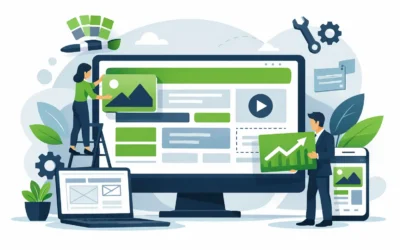
If you are staring at a blank page, a half-finished homepage, or a list of website tasks you have been putting off for weeks, AI can shorten the path. The real value in learning how to use ChatGPT to build a website is not that it replaces strategy, design, or hosting decisions. It helps you move faster through planning, writing, structuring, and troubleshooting so you can get a reliable site online sooner.
That distinction matters. ChatGPT is a strong assistant, not a complete website platform. It can help you map your pages, write your copy, generate starter code, suggest SEO elements, and explain technical choices in plain English. What it cannot do on its own is host your site, guarantee performance, secure your server, or make business decisions for you. For small businesses, bloggers, agencies, and startups, the best results come from using AI for speed and using dependable hosting and infrastructure for everything that needs to work consistently.
How to use ChatGPT to build a website the right way
The fastest way to waste time with ChatGPT is to ask it something vague like, “build me a website.” You will get a generic answer, and generic answers usually lead to generic sites. A better approach is to treat it like a capable project assistant and give it context.
Start with your website goals. Tell ChatGPT what kind of business you run, who the site is for, what actions you want visitors to take, and which pages you need. If you are a local service company, that may mean a homepage, services page, about page, location page, and contact form. If you run an online store, you may need product category pages, product descriptions, FAQ content, policy pages, and email signup prompts.
Once ChatGPT understands the business, ask it to create a simple site map. This step is often skipped, but it saves time later. A clear structure keeps your navigation focused and helps you avoid the common mistake of cramming too much onto the homepage.
From there, use it page by page. Ask for a homepage outline, headline options, service page sections, calls to action, and draft body copy written for your audience. If you are launching a professional services website, ask for copy that sounds trustworthy and direct. If you are building a developer portfolio, ask for tighter language with more technical specificity. The quality of the result depends heavily on the quality of your prompt.
What ChatGPT can handle well
ChatGPT is especially useful in the early and middle stages of a website project. It can help organize ideas quickly, which is often more valuable than producing final copy on the first try.
For planning, it can create a page structure, define user paths, and suggest content blocks for each section. For writing, it can draft headlines, service descriptions, product summaries, FAQs, metadata, and contact page copy. For design support, it can suggest layout ideas, visual hierarchy, and section order, even if you are using a site builder rather than coding from scratch.
It can also help with code, within reason. If you need a simple HTML landing page, CSS styling, or a JavaScript snippet for a form interaction, ChatGPT can produce a usable starting point. If you are working in WordPress, it can explain template logic, help you write custom CSS, or troubleshoot plugin conflicts conceptually. Developers can use it to speed up repetitive tasks, but they still need to review what it generates.
This is where trade-offs matter. AI-generated code may look correct while still missing context, introducing inefficiencies, or creating security issues. For a brochure site, that may be manageable. For anything tied to customer data, payments, or advanced functionality, review becomes non-negotiable.
How to prompt ChatGPT for better website output
Good prompts are specific, role-based, and constrained. That means telling ChatGPT who it is, what you need, who the audience is, and what format the answer should follow.
For example, instead of asking for a homepage, ask it to act as a website copywriter for a US-based roofing company targeting homeowners in Dallas. Request a homepage with a clear hero section, trust indicators, service overview, financing section, testimonial block, and strong call to action. Mention the tone you want, such as professional, straightforward, and local. This gives the model enough direction to produce something useful.
You can improve results further by feeding it source material. Paste in your existing service list, customer testimonials, brand notes, or product details. Then ask it to rewrite, reorganize, or simplify. In most cases, ChatGPT performs better when it edits and structures real business information than when it invents everything from scratch.
It also helps to work iteratively. Ask for three headline options. Pick one. Ask for a stronger subheading. Then refine the body text. This back-and-forth usually produces better website content than trying to generate the full site in a single prompt.
How to use ChatGPT to build a website with a builder or CMS
Most business owners are not hand-coding an entire site, and they do not need to. If you are using WordPress, a website builder, or an eCommerce platform, ChatGPT fits into the workflow as a content and setup assistant.
In WordPress, you can use it to plan menus, draft page copy, generate blog topic ideas, write title tags and meta descriptions, and suggest plugin categories based on your needs. It can explain the difference between themes, page builders, caching tools, and security plugins in plain language. That is useful for beginners who want clarity before making changes.
If you are using a drag-and-drop builder, ask ChatGPT to map your content into sections you can drop directly into the layout. Instead of designing from scratch, you can tell it your homepage uses a hero banner, three-column service section, testimonial strip, and contact block. It can then write content to fit those components.
For more advanced users, ChatGPT can help document workflows, write reusable code snippets, and create client-ready drafts faster. Agencies and freelancers often get the most value from AI when they use it to reduce repetitive work while keeping final review in human hands.
Where hosting still matters
AI can help you create a website, but it does not solve the infrastructure side of the job. A good-looking site with thin hosting, poor security, or slow performance still creates a bad user experience.
That is why your launch plan needs more than content and design. You still need a domain, SSL certificate, reliable storage, backups, performance optimization, and support when something breaks. If your traffic grows, you may also need a path from shared hosting to cloud, VPS, or dedicated infrastructure without rebuilding everything.
This is one area where businesses often underestimate risk. ChatGPT can suggest best practices for performance and security, but it cannot monitor uptime, manage malware, patch server issues, or restore your site after a failed update. Those are hosting decisions, not prompt decisions.
For that reason, it makes sense to use AI for speed and a hosting partner for stability. Charter Hosting is built around that balance, with options that fit first-time site launches as well as more demanding WordPress, reseller, and server environments.
Common mistakes to avoid
The most common mistake is publishing AI copy without editing it for accuracy, tone, and usefulness. Website visitors can tell when content feels padded or generic. If every service page sounds the same and says very little, trust drops quickly.
Another mistake is relying on ChatGPT for legal, compliance, or security-sensitive content without review. Privacy policies, accessibility claims, medical language, financial statements, and technical guarantees should be checked carefully. AI can draft these items, but it should not be the final authority.
There is also the temptation to overbuild. Because ChatGPT can generate endless ideas, some site owners end up adding too many pages, too many features, and too much copy. A smaller site with clear navigation, strong messaging, and dependable performance usually works better than a bloated site that confuses visitors.
A practical workflow that saves time
A simple workflow works best. Start by asking ChatGPT for a site map and page goals. Next, generate outlines and copy for each page. Then move into design, either with a CMS, builder, or custom development setup. After that, use ChatGPT again for SEO elements, image alt text, FAQs, and launch checklists.
Before publishing, review everything manually. Check facts, tighten the language, remove filler, and make sure each page leads the visitor toward a clear next step. Then test performance, forms, mobile layout, SSL, backups, and security settings in your hosting environment.
Used well, ChatGPT can take hours out of the website process. It can help you think more clearly, write faster, and get unstuck when you do not know what comes next. The best results come when you pair that speed with sound structure, careful review, and hosting you can rely on after the site goes live.
A website does not need to start perfect. It needs to launch with clear messaging, solid performance, and room to grow, and ChatGPT can help you get there faster if you use it as a tool, not a shortcut.